
Most service businesses eventually face one of two challenges: understanding where work hours are going or improving how projects and teams are managed. That is where time tracking software and project management software come in. While the two are often used together, they are built to solve different problems.
According to Microsoft Work Trend Index, 2023, 68% of employees say they lack enough uninterrupted focus time during the workday, highlighting the growing need for better time management and workflow tools.
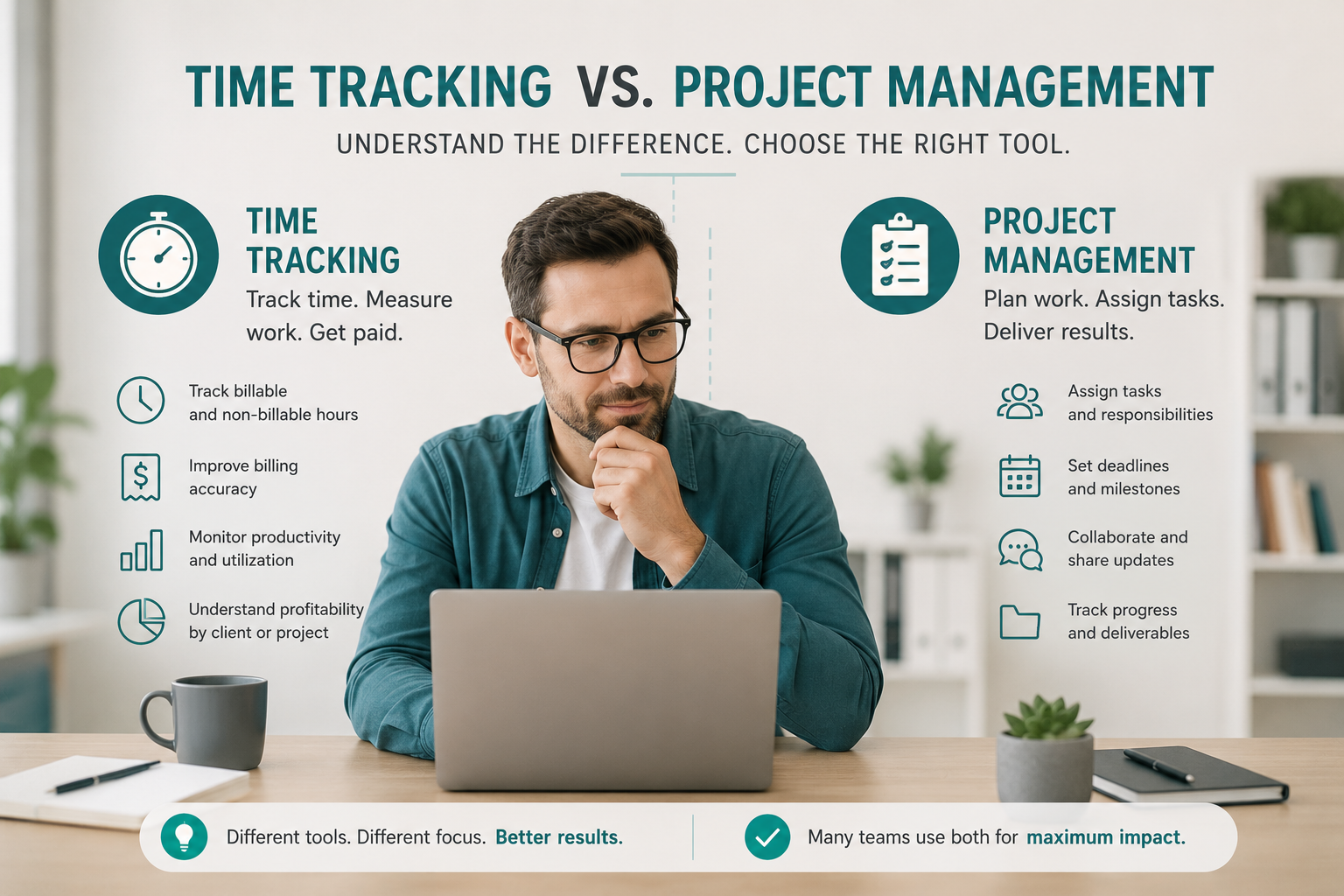
Time tracking software focuses on recording hours worked, monitoring productivity, and supporting accurate billing or payroll. Project management software focuses on organizing tasks, managing deadlines, and coordinating team responsibilities. The confusion usually starts when businesses expect one tool to do everything. Although some tools overlap in features, their core purpose remains different. Understanding the distinction is important before investing in new software.
In this post, we’ll explain the key differences between time tracking software and project management software, when each tool makes sense, and how to determine whether your business needs one or both.
Time Tracking vs. Project Management Software: The Core Difference
Time tracking software helps businesses measure how time is spent across projects, clients, and teams. It is commonly used for billing, payroll, budgeting, and productivity reporting. Project management software, on the other hand, helps teams organize work by managing tasks, deadlines, responsibilities, and project progress.
The difference matters because each tool addresses a different operational need. Businesses focused on improving accountability and recovering billable hours often benefit more from time tracking, while teams managing complex workflows and multiple contributors typically need stronger project management capabilities.
A simple way to tell the difference is this:
- If your main question is, “How much time did we spend on this work, and should we bill for it?” you likely need time tracking software.
- If your main question is, “Who is responsible for this task, and when should it be completed?” you likely need project management software.
As businesses grow, many eventually use both together. Time tracking provides visibility into hours, costs, and productivity, while project management keeps teams aligned around tasks, deadlines, and deliverables.
What Time Tracking Software Does
Time tracking software is designed to monitor how time is spent across employees, clients, tasks, or projects. It is especially valuable for service businesses, agencies, consultants, freelancers, and teams that bill clients based on hours worked.
Common features include:
- Start and stop timers tied to clients, projects, or tasks
- Manual time entry for logging work after completion
- Billable and non-billable hour categorization
- Invoice generation based on tracked time
- Productivity, utilization, and profitability reporting
The primary goal is accountability and visibility into work hours. Businesses use these tools to improve payroll accuracy, recover billable hours, manage project budgets, and understand team productivity more clearly.
What Project Management Software Does
Project management software is designed to help teams plan, organize, and execute work more efficiently. Instead of focusing on hours worked, it focuses on coordinating tasks, deadlines, workflows, and collaboration across a project.
Common features include:
- Task creation, assignment, and deadline management
- Project timelines, milestones, and progress tracking
- Team collaboration and file sharing
- Status updates and workflow management
- Workload and resource visibility across teams
The primary goal is coordination and execution. These tools help teams stay organized, reduce bottlenecks, improve communication, and ensure projects are completed on time, especially when multiple people are involved.
Where They Overlap
Project management software and time tracking apps are two of the most widely used tools for improving business operations and team efficiency. As these platforms continue to evolve, many now include features traditionally associated with the other category.
For example, many project management tools often include built-in time tracking to help teams monitor hours spent on tasks and projects. Likewise, advanced time tracking tools may offer basic task management and project organization features.
Some all-in-one business management platforms combine both capabilities in a single system, allowing service businesses to manage projects, track time, monitor productivity, and support billing from one place. However, despite the overlap, most tools still focus primarily on either time tracking or project management, which is why understanding their core purpose remains important when choosing the right solution.
Which Solution Do You Actually Need?
The right choice depends on your operational priorities. Businesses focused on billable hours and profitability often start with time tracking, while teams managing complex workflows usually benefit more from project management tools. As operations grow, many service firms eventually combine both.
|
Your Situation |
Best Fit |
|
Solo freelancer charging clients by the hour |
Time tracking software |
|
Agency managing multiple projects and team members |
Project management software with time tracking |
|
Consulting firm handling retainers, billing, and project delivery |
All-in-one business management platform |
|
Internal operations team without client billing |
Project management software |
|
Service business billing by milestones or project phases |
Project management platform with invoicing or all-in-one solution |
Choose the Tool That Solves Your Biggest Problem
The right software depends on the challenge your business is trying to solve. If you need better visibility into billable hours, payroll, or team productivity, start with time tracking software. If your biggest issue is managing tasks, deadlines, and team coordination, project management software is the better fit.
Many growing service businesses eventually need both. Time tracking helps measure performance and profitability, while project management keeps projects organized and teams aligned. Together, they create a more efficient and scalable operation.
If you want to manage projects, track time, monitor productivity, and handle billing in one place, platforms like Bizman can help simplify operations with an all-in-one business management solution.
Popular Posts

Most service businesses eventually face one of...

Business management software helps SMBs...

Time tracking software is a digital tool that...